It is hard to attend an education conference or scroll through social media these days without encountering conversations about AI. We hear about Apps that promise higher engagement, tools that personalise learning, platforms that provide instant feedback, and technologies that reduce teacher workload. Much of this is exciting and much of it is genuinely helpful. Yet, it makes me question what the impact may be on communicative language teaching which evolves around student-centred teaching. Shouldn’t meaningful interactions and human connections be at the heart of learning and teaching?
Now, don’t get me wrong this blog is not an argument against AI. Rather, it is a call to be critical towards AI use and keep placing human beings, the learners, at the centre of our teaching and not the technology. Teaching, at its core, is relational and communicative language teaching where we want learners to work in pair and groups even more so. Students do not only learn from us, they learn with us and through one another.
While AI can generate tasks, model language, and even simulate conversations, what it cannot do is responding to each and every learner in a way that suits their specific emotional needs. Yes, AI can provide engaging activities, give encouragement and share instant feedback and even praise, however, it cannot (yet….) attune itself to the emotional state of a learner. AI does not read the room as we do and does not sense tension or embarrassment in the room, nor does it notice when a student is uncomfortable to speak up. It doesn’t build trust over time. No tool, however sophisticated, can replace the emotional, social, and relational conditions that allow learners to feel safe enough to participate and try to experiment with new language. That work, the work of building relationships, is our job.
Rapport or relationships?
Even though in teacher training course rapport building is often addressed, it is important to clarify that rapport building, whilst invaluable, is not the same as building relationships with and among learners. Rapport is about warmth, friendliness, and a positive classroom atmosphere. It helps lessons run smoothly and can make learners feel comfortable. “Having good rapport is when there is evidence that learners both like the teacher and respect his or her professionalism” (Thornbury, 2017, p.237). In other words, it is about making students feel comfortable and safe, so they are open to participation.
Relationships go deeper than rapport. Relationships are built over time and are about understanding students’ needs, interests, strengths and challenges, and adapting our teaching to this to support their growth. “It’s a meaningful connection with another human being, in particular, a student’s healthy-enough, safe-enough relationship with a teacher” (Souers & Hall, 2018, p.78). This connection is built on trust, consistency, mutual respect, empathy, and care and can help students persist when learning becomes uncomfortable. Relationships take time to build, they do not form overnight and need to be planned for intentionally. So if relationships are the foundation of learning, what can we do in the classroom to support them?
Why relationships matter now maybe more than ever

Over time we get to know our learners. Our observations and daily interactions with our learners guide us in how to best respond to each of our learners and their needs. For example, when disappointing grades come out, some learners may need us to sit and listen when they are upset about their results, others respond better to us giving them a pep-talk and some may want our help to fix their mistakes. Attuning our approach shows our learners we truly care about them as a person, not just as a student number or grade, and that we’ve got their back.
Motivation, engagement, persistence, and willingness to take risks in the language classroom are also shaped by the quality of the relationship between you and the learners. When learners feel that they are just a number and our interactions with them are purely transactional, they may retreat into silence. It is also the relationship between students that matters, they are more likely to ask questions and try out new language when they feel psychologically safe with their peers. I mean, who is willing to take a risk and try to answer a question if they do this may end up in them being ridiculed in front of peers? It is up to us to ensure that learners can build those relationships together.
Galea and Sayer (2024) remind us that “Human connections should still be regarded as the foundation of good teaching and should not be wholly substituted by technology” (p. 67). This statement feels particularly important at a time when research is showing that a downside of all the personalisation AI can bring to education is the shift to individualisation of learning. Recent research has indicated that social skills can be negatively affected by the use of devices, which might not come as a surprise for many of us.
A humanistic lens: ASPIRE as a relational framework
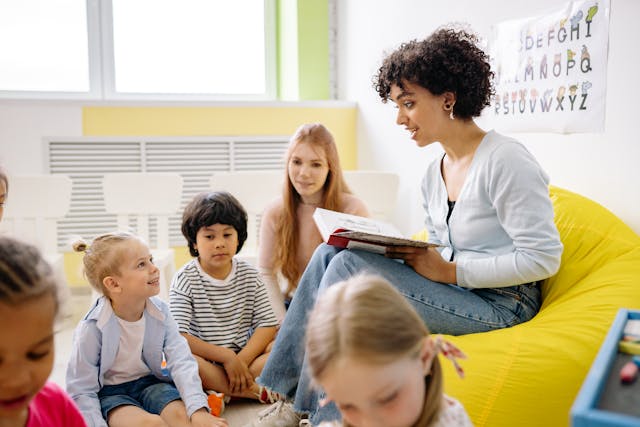
The below ASPIRE framework offers a practical, humanistic lens to intentionally build meaningful and maintain relationships. It foregrounds the interpersonal conditions that allow learning to flourish, with or without technology, and supports both psychological safety and motivation in the classroom. Intentionally planning for these conditions can help us cultivate relationships that enable learners to not just survive but thrive.
Authenticity – Learners respond to teachers who are real, not perfect. Letting students see that you’re human builds trust. Share some of your challenges in learning, show curiosity, and allow learners to see you as human by acknowledging things that aren’t perfect. For example “This activity didn’t work as I hoped, so let’s adapt it together.” This models learning as a shared authentic process, not just a robotic performance.
Safety – Psychological safety is the foundation of all learning. Feeling accepted for who they are, feeling permitted to make mistakes, and having one’s identity respected are all profound elements of quality relationships. Let students know that everything you do comes from a place of care and positive intent.
Presence – Presence is about being fully attentive, not just physically in the room, but emotionally and relationally available to our learners. In a world of digital distraction, your presence is a powerful signal of showing learners matter. You can show this for example, by simply showing focused listening and being all E.A.R.S when learners are speaking: make eye contact (if appropriate), acknowledge you hear them, respond by asking follow-up question and say thanks for sharing.
Inclusivity: Good relationships recognise the value of diverse identities, traditions, and worldviews our learners bring. It is important to see learners as whole people and this includes valuing diverse linguistic, cultural, and neurodiverse experiences they bring to class. Invite your learners to share experiences related to these aspects of their identities in the classroom.
Respect: Respect is mutual, it is not only about them respecting you it is also about us respecting them! Respecting our learners involves honouring their voices, choices, and inviting them to take responsibility in the classroom. Giving them choice or options, for example which topic they would like talk about or how they would like to demonstrate their learning, may in a recording or a life presentation. Taking student feedback seriously, also show that we respect our learners.
Empathy: Perhaps the most powerful aspect of relationship building is empathy which allows us to see the learning journey through their eyes and respond to them with care. When we show empathy, especially during those challenging moments, we truly build trust-based relationships. It can be as simple as saying, “I can see this feels frustrating, let’s take it step by step,” instead of responding with a teacher’s mindset which often focuses on correcting or fixing the problem.

Final thoughts
Without a doubt, AI will continue to evolve and it will most certainly reshape and transform language education. In an age of AI, perhaps our most important task as teachers is to teach in ways that are genuinely human and focus on relating to our learners. What matters is that the foundation of good teaching has not changed because our brains are still hard-wired to connect. Feeling connected brings along a sense of safety which is crucial to create the conditions in which learning becomes possible. So whilst AI can support learning, only humans can create the conditions where learners feel connected. Yes, technology can support this it is not substitute for building relationships, that still belongs to us.
References
Galea, E, & Sayer, O. (2025). Generation Alpha in the classroom new approaches to learning. OUP
OECD. (2025). The impact of digital technologies on students’ learning: Results from a literature review.
https://www.theguardian.com/society/2026/jan/11/excessive-screen-time-limits-vocabulary-of-toddlers-experts-warn
Souers, K. V. M., & Hall, P. (2018). Relationship, responsibility, and regulation: Trauma-invested practices for fostering resilient learners. ASCD.
Thornbury, S. (2017). The New A-Z of ELT Paperback. A dictionary of terms and concepts. Macmillan