One step forward and two steps back

‘How long are you planning on doing that for?’ It was the end of the seventies, and I was chatting to my father about what I planned to do career-wise, having graduated with a degree in French. At the time, I had spent a year abroad teaching in a French high school and two summer vacations looking after (well OK, ‘teaching’) groups of kids doing English courses in my hometown. All I really wanted to do was get back to France and be able to work enough to enjoy life. Maybe even write the novel which was fighting to get out. To be fair, my father was great about my plan, he even offered to pay for the four-week course which would give me the minimum qualification to teach English to adults. A couple of months later I had completed the course and been offered a job teaching in the historical south coast town of Hastings.

In those days, thousands of people came from countries all over the world to schools in the UK to learn English full time. My very first class had a young man from Bahrain out of his country for the first time ever, a woman from Syria keen to improve her spoken English, a Turk who loved motorcycles and a Swiss professional woman aiming for an exam in a few months’ time, among a whole mix of people who studied together for four weeks. We used a coursebook and worked our way through it, occasionally going off-piste for something more fun. At the end of each course, some would leave and some would go up a level. It was fun and I was paid to do it. I was the youngest on the staff and probably the only one who hadn’t taught abroad. I was very lucky. We did twenty-two-and-a-half hours per week with Friday afternoons free. There was a lot of observation and in-service training – and, after a couple of years, I completed the RSA Certificate as it was then known. General English in those days was the most popular course, the specialisations hadn’t really got off the ground yet. These days, of course, that particular strand is less popular as so many other ways of picking up a language have evolved over time. Having some form of specialisation, be it technical English or EAP will definitely hold you in good stead in the future.

After two years teaching general and business English classes, I was asked to be Director of Studies of the Summer Holiday Courses, and that was my first career choice – did I want to teach or manage?

Forty years later I am editing a magazine for teachers of English, having at various stages been a coursebook writer, a teacher trainer, a publishing manager, a school director and, above all, a teacher. Throughout my career, doors have opened and options have been there. Is the landscape still the same? Are there as many opportunities today? Is it a career worth pursuing? In this article I will look at some of the career paths available and comment on them.

The beginning

Looking back at my time in Hastings, it became obvious after one summer that the materials we were using on the summer holiday courses were simply not appropriate for our students. The school gave three of us time over the winter to produce our own books. Spiral-bound and photocopied, they were my first attempt at creating resources for people outside my own classroom. As John Hughes says in an article in this issue, all of us write materials, you cannot teach without inventing exercises, texts, tests and dictations, but only a few take the step to develop it as a career. As it would turn out, writing materials became my way into publishing at a later stage in my life. It is still a viable route, but with the threat of AI, you will need to be careful as to which aspect of materials writing you opt for.

The move to coordinating

My next move was to Paris to become the director of studies of a school there. A large part of the new job was coordinating the teachers, deciding how we could best use the thirty or so we had to cover the everchanging hours to teach all over the city. An important skill I developed at that point was persuasion. Teaching has a hierarchy, but it is not a military style one. You really had to ask people to do extra classes or travel a long way to a company to teach early in the morning. It is a similar skill to that used in teaching when leaners are not keen to do a task or, indeed, in selling, when you are trying to show the benefits of a particular product or service. Any chance to coordinate, on any sized project, is definitely worth taking up, it leads naturally to a project management role or similar. As a teacher, you already have the skills required to plan courses, organise tasks, teaching and assessments, so stepping into coordination should always be considered.

Sales

Coming back to selling, it is absolutely true that some of the best teachers I have known have gone on to be good at sales. That ability to be always positive, always listening and sure that you can make the customer’s life better is a good one to develop if you have it. As a career choice, sales is a vital aspect of becoming a freelancer as well, if that is a route you choose to go down. I will look at some of the skills required for setting up your own business later in the article. Don’t become the sort of employee who has scorn for sales, without sales there are no courses in the private sector. It is also usually the sales team, or the marketing staff who know what the competition are doing and, therefore, what a school should be doing to remain competitive. With all these career choices, I often think a stint in any department is beneficial – you learn so much.

Managing

As director of studies or academic manager, you are always halfway between the teaching team and the senior management. There are a number of skills you can transfer straight across from teaching, but it is probably the levels of stress which are the hardest to manage. Being responsible for a team of teachers delivering lessons simultaneously and often across a long day, can be quite draining. Learning to find time for yourself and to insist on barriers between work life and homelife are key. Otherwise, academic management can be immensely rewarding. Developing new products, recruiting and training teachers, managing projects and developing new courses can all be part of the role, and all offer further options down the line. The step I took from director of studies was the big one to actually running the school. The most help I got with this particular move was a floppy disc with the Excel program on it. It took me a couple of days to learn how to make spreadsheets, but from then on, right up until now, it has been the one program I depend on. Over my career it has been used for preparing accounts, keeping an eye on cash-flow, timetabling teachers, project management, syllabus design and many other tasks. I suspect that over the next few years other programs will become equally important to learn up on. Be that as it may, taking on extra responsibilities has always been something I have looked to do – importantly, it helps differentiate you from other members of the staff. So if a responsibility post comes up at your school, no matter how small, do put yourself forward for it.

Authoring: moving back

After a period running a school, what I missed most was the contact with the classroom. I was doing less teaching, fewer observations and felt aware that I needed to be more in touch. Fortunately at that point, I embarked on a materials writing project with David Grant and OUP published Business Basics two years later. Trialling exercises and other activities became an important part of my life and I began to reconsider the whole role of published materials. Why were the publishers not making books short enough for our courses, or specifically for one-to-one teaching? When would it be possible to provide customised courses based on specific industrial, commercial or pedagogic needs?

What was starting to slightly dispirit me selling in-company courses in Paris was the fact that so few of our learners made a lot of progress. More often than not, they were freshening up what they already knew or getting ready for a specific mission. The average course length was probably 30 hours per year, usually paid for by the company as part of France’s generous training laws. I was also getting slightly envious of those people in the UK running intensive immersion courses where the motivation seemed higher and presence was pretty much 100%. Too many of our classes in Paris suffered from poor attendance – there was always the pressure of work to keep people away.

So after twelve years running the school in Paris, when an offer to run a school in Oxford came along I was pretty keen. It meant a new employer after seventeen years, and a whole new set of values. You rarely understand the values at the interview stage, but it is a very important aspect of work and career choice. My recommendation would be to find out as much as you can about an employer from the inside, not from their external marketing message.

Running a school in Oxford is very rewarding, people are delighted to be there, whether paid by their company or their parents, and there is definitely a cachet attached to being in the world’s most famous educational town. Students learn better there simply because they are surrounded by English: from the bus in the morning to the sandwich shop at lunchtime. During my six years running that school, however, a new phenomenon arrived: the internet. What a boon that was – access to music, films, talks and shows, all in English. What we were slow to realise was that this would change language learning forever. When I walk through Oxford these days, I don’t see the same number of students there to learn English – there are many students, but more likely preparing for university or studying at a high school, learning content in English. The standard of English teaching is no higher here than in other countries so it is inevitable that people stay in their own country longer before investing in the specialised education of high school or university.

Publishing

Over my career, the ELT publishers have helped the spread of the language with an amazing array of brilliant materials published here for use abroad. One of those publishers was only two kilometres from the school I was running, but it was still a great surprise when they contacted me to see if I would like a role in the publishing business. Most people moving into ELT publishing on the editorial side start as editors and move up. OUP wanted me to start as a publishing manager in charge of planning and commissioning titles for business English and ESP. Inevitably, there were comments about how much I knew about publishing despite the fact that I had co-authored a successful title and spent at least twenty years recommending and buying titles for the schools and clients I looked after. Whenever you join a new company there will always be people who take time accepting you, and some who positively make it difficult for you. They will usually be outweighed by those who welcome you.

It is often said that in the first year of a job you should listen and watch, make sure that what you said you would do at the interview is still worthwhile and achievable. In the second year, you need to start setting some of the projects in motion and achieving some initial goals. By the third year, you will be being judged for what difference you have made. It is not really a lot of time. By the fourth year, you might have added to your responsibilities or, possibly, be starting to look around again. That timescale is based on my career, not the rapidly changing world we now live in, so today we should probably divide all those numbers by two or three!

Freelancing

In the end, I stayed at OUP for exactly ten years and moved on to what I had always thought would be a worthwhile lifestyle: freelancing. To be a successful freelancer, you need such a different set of skills, but it is very rewarding. Nobody cares if you are working – except you. Nobody knows how much you have taken on, except you. Getting the balance right, meeting deadlines, schmoozing, networking, pitching all take time and effort. Sometimes the fee is just too low, sometimes you are too busy; occasionally, you feel that someone else is better suited. Nobody is watching you and nobody is training you anymore. It can be quite lonely. But definitely worth it – until the arrival of AI and globalisation. The playing field is not that level anymore. But, and I am starting with this word for emphasis, if you are confident and a self-starter, freelancing is a great life – with your favourite-ever manager, yourself. Make sure you are confident about the legal, commercial and financial aspects of being in charge of your own business and always have a good cash-flow tool available. When the money comes in is as important as how much.

On the move again

For my last full-time mission, I was tempted with life abroad again and was fortunate enough to apply for and get a position in a polytechnic in New Zealand. It was a role combining teaching and professional development. I was already editing Modern English Teacher so I had the ideas of twenty-five teachers to support me in every issue. Running in-service training and helping individual teachers was a great way to spend four years; and the best part about the job was that I had nobody to manage and no budgets to control. I was living in one of the greatest countries in the world doing one of the least stressful jobs of my life. The pandemic came and went, we taught online, no tourists could get in and we couldn’t get out (not with a view to coming back). Happy days. The only question left was that of how long I could keep doing it. Remoteness from home and a feeling of age encouraged me to resign after four years. Returning to Oxford, I vowed that there would be no more teaching. I got a call – just two weeks work in the summer. That was in 2022. I will be doing the same thing in 2026. Teaching and training are fun. Just make sure you consider carefully all the options. You never know what you are good at until you try.

More articles

Recent articles

Robert McLarty
Robert McLarty
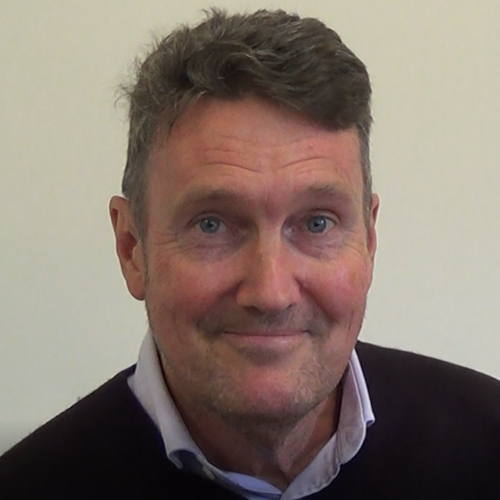
Robert McLarty has been involved in Business English teaching since 1979. He is a teacher and teacher trainer, and has run a number of RSA Diploma and teacher-training courses. From 1986 to 1997, Robert was the Director of ILC Paris. In 1998 he moved to Oxford to run OISE Oxford and in 2004 he joined Oxford University Press' ELT Division as Publishing Manager, Business English.